Hi! Welcome to my July 2026 newsletter, the first of its kind for my new blog. Here are my writing updates, short book reviews, and news from the last month.
Writing Updates
My most exciting news for this month is about my novel-in-progress, which has the working title of The Sylvan Manor. The manuscript is a YA Gothic fantasy set in a cursed forest (a supernatural secondary-world imagining of the Blue Ridge Mountains, my home region) and the story follows a teenage scholar of magic whose illegal prophetic visions keep landing her in trouble with the nobility. If you read my short story “Mirrorless” when Coffin Bell published it in 2024, the setting (and some characters!) of The Sylvan Manor will be familiar to you.
As of June 22nd, after a year and a half of writing, I’ve officially finished the first draft! This is the first full novel draft I’ve completed as an adult, and though the rest of summer will need to be spent in revision before I can send The Sylvan Manor to beta readers and eventually on submission, I’m still very pleased to have made it this far in the writing process. Reaching this milestone would not have been possible without the kindness and support of my academic mentors, workshop peers, family, and friends.
Book Reviews
I read 5 books in June. One was a manuscript submitted to the literary agency at which I’m currently interning, so I can’t discuss its contents, but it means the world to me that I’m in a position to be trusted with other writers’ unpublished work. There’s so much to learn from every book, regardless of publication status or genre—about the craft of writing, about the world, about others’ outlook on both. Here are my thoughts about the books I read on my own time:
The Hybrid Prince by Tui T. Sutherland (Scholastic Press, 2026)

If you’ve known me since childhood, you’ll know how much the dragon-centric MG series Wings of Fire meant to me growing up. Honestly, Tui T. Sutherland is probably responsible for at least 50% of who I am as a person, and why I’m a writer. I stopped reading Wings of Fire after Book 10 in 2017, and although I retained all my fondness for the series, I only picked up Book 16 through a twist of fate. My partner is working in elementary education right now, and she brought a copy of The Hybrid Prince home because her students are still obsessed with Wings of Fire in 2026 (news that delights me, obviously). We took turns reading chapters aloud to each other dramatically. In a win-win situation, she got to familiarize herself with what the kids are reading nowadays, and I got to revisit a world I’d once loved with my whole being.
About the book itself. The Hybrid Prince is dedicated to the librarians, educators, and “everyone else working to protect our freedom to read”, referencing the onslaught of politically-based book banning that has spread like a viral illness throughout the United States. Tui T. Sutherland herself is one of these people dedicated instead to freedom, as demonstrated by The Hybrid Prince’s unabashed compassion and willingness to explore difficult contemporary topics. The plot introduces an isolated island, run by a monarchy that seized power through an unpopular coup, dissecting how resistance to tyranny may be dangerous and complicated, but is always a better choice than silent complicity. The anti-war themes of the original five books return through the lens of the protagonist Umber, a former child soldier now caring for a sister who suffers from PTSD. All potentially difficult topics for kids, right? But the adults they’ll grow into need to know about these realities, and introducing these ideas at an age-appropriate level in exciting kids’ fantasy books is a recipe for cultivating empathetic, informed readers—and people, in general. That’s what Wings of Fire did for me, at least. The Hybrid Prince also features a sweet romance between Umber and the titular Prince Mulberry, an affirmation and embrace of queer readers at a time when our literature is being directly attacked and censored by book banners.
Children’s books matter, always. Tui T. Sutherland’s work proves that.
Elatsoe by Darcie Little Badger (Levine Querido, 2020)
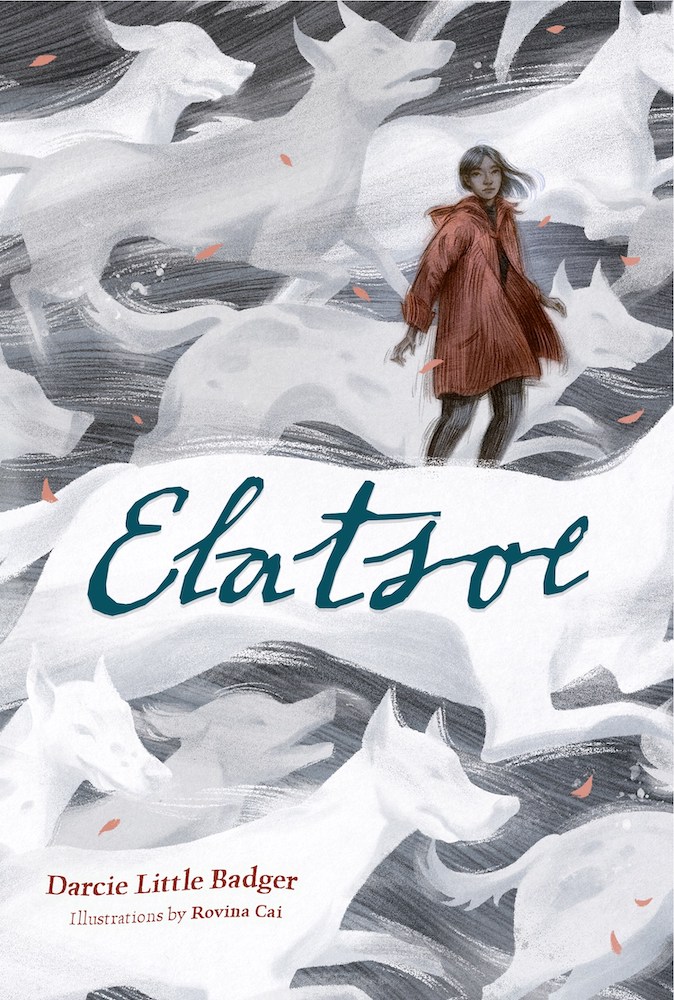
Elatsoe is a YA contemporary fantasy novel that follows Ellie, a Lipan Apache teenager with the ability to raise animal ghosts ranging from her beloved pet dog to long-extinct trilobites. When her older cousin is killed and his ghost reveals his murderer’s name to Ellie in a dream, she and her parents travel to the strange town of Willowby, Texas to mourn and pursue justice. The United States Ellie lives in follows a similar history to our own, with the exception that magic and the supernatural have always been real, and influence daily life in unexpected ways. Ellie’s Six-Great Grandmother, who lived along the banks of the Kunétai River, was a renowned monster hunter, and Ellie hopes to follow in her footsteps to protect her family—but does she yet have the wisdom to do so safely, when human ghosts are vengeful and ravenous and colonizers are as dangerous as ever?
This book is a beautiful, whimsical, deeply important slice of a fully believable world and protagonist. The slipstream-esque tone reminded me a bit of Welcome to Night Vale, but wholly unique in its aim. My favorite lines occurred towards the end, on page 342:
“‘My friend is gone.’
Gone where?
‘Below,’ Ellie said.
Oh. Sure, sure. Many of my friends have gone there, too. The coyote lowered her yellow eyes and sighed. It was a distinctly canine sigh, a too-quick whuff of air through her black nose. More there than here. Have we met before? I meet so many people. It’s hard to remember every face. Sometimes, I see a stranger that makes me feel something. So I think: maybe this is not really a stranger.”
I don’t have much to editorialize about this passage, only that it reminds why writing matters in the first place.
I was also delighted to discover that, like Among the Burning Flowers by Samantha Shannon (which I read in May), Elatsoe is filled with stunning monochrome illustrations by artist Rovina Cai. The interior design and typesetting in Cochin was a gorgeous choice, too. The representation of asexuality was subtle and realistic. I highly recommend this to anyone looking for a unique, engaging, and meaningful book, YA fantasy or otherwise. This was the first novel I’ve read by Darcie Little Badger, and now I am devoted to reading more of her work when I can.
Never Let Me Go by Kazuo Ishiguro (Faber and Faber, 2005)
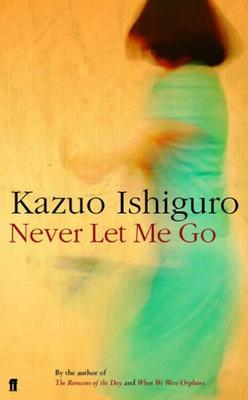
I read an excerpt of this literary sci-fi classic in a high school English class circa 2019, but had never picked up the full text, so I decided to give it a try to switch up from MG/YA fantasy. For about the first 75%, I was underwhelmed; knowing the premise of the world before going in left me feeling a bit stuck, like I was waiting for the clone aspect to appear in full force—and it didn’t, not for a while and not in the way I expected. I’m used to quicker-paced science fiction, I suppose, but I kept my patience and I’m glad I did.
This book is about childhood and coming-of-age; about one’s own perception of themself in context of a wider, crueler world that they can never fully understand; about entangled relationships and the inherent tragedy of mortality. At least, that’s what I took away from it. I was initially frustrated by the narrator’s lack of direct reckoning with the obviously unfair sociopolitical context of her life, but I came to realize by the end that the opacity is the point. She’s not able to confront the truth directly because she’s an ordinary person living her life, intentionally kept from questioning her oppressive reality. I would read another book by Kazuo Ishiguro.
The Saint of Bright Doors by Vajra Chandrasekera (Tordotcom, 2023)

Every time I read a book, I pay attention to what could be called the “invisible laws and powers” of its narrative and world (whether the world in question is a faithful approximation of our own, a speculative variant, or fully secondary and constructed). How does power flow on the page between people, between institutions? Are there biases or insinuations on the matter in the subtext, or directly in the text? Are the characters aware of them? What history is suggested? Is the book interested in these aspects of its own being, and if not, why? The invisible forces are always there, after all, regardless of a book’s age category, genre, or political intent. They underlie everything; it’s only a matter of whether they’re noticed—by the author, the narrator(s), or the reader alike. I love books that address them directly and I am also very interested in books that fail to address them. The Saint of Bright Doors does not only address the “invisible laws and powers” of its reality; in many ways, the story is about them.
This book is a fundamental entry in the New Weird genre—I’m surprised it’s only been out for three years, because it feels influential moreso than influenced. I’d read Vajra Chandrasekera’s Rakesfall, which won last year’s Ursula K. Le Guin Prize; that novel is also a staggering accomplishment of Weird fiction, though it leans more science fiction than fantasy and is much less interested in reader accessibility than this one, his first book. As other readers have noted about The Saint of Bright Doors, the worldbuilding is both mythologic and modern, initially overwhelming but cyclical in an assured and rewarding way. I’m always obsessed with craft-choices-as-plot-and-characterization-choices, especially regarding narrative perspective (like Harrow the Ninth or Leech), so I ate up the reveal/twist at the end. Overall, this is a sweeping and singular fantasy epic with important themes to state and to listen to.
Other News
Several of my friends have writing news that I’d like to spotlight as well!
Backscatter Zine is accepting multimedia visual art submissions for their first issue, on the theme of ‘Omens’, until the end of August—send them your work if you have (or can create) anything that fits!
My friend Annabelle Oberst has a new creative nonfiction essay, “On Shame”, out in Chaotic Merge! You can read the digital version on the magazine’s website; don’t miss Annebelle’s exploration of the complex intersection of (among other personal themes) queerness, asexuality, and a Catholic upbringing.
My friend Catherine Pabalate (@phantasmagirlia) has a new short story, “Sister Temper”, out now in Night Picnic: Volume 9, Issue 1! I was lucky enough to read an early draft of this historical religious horror piece in a fiction workshop we shared in undergrad, so I can say with certainty that you will love it.
Upcoming Plans
I’ll be spending the first half of July teaching—I’m a counselor for UNC Wilmington’s Young Writers Workshop, meaning I’ll be leading a workshop for a small group of teenage writers. I’m very excited! I remember how much it meant to me for my writing to be taken seriously by others when I was in high school, so I’m happy to now get to do the same for younger writers.
Otherwise, I plan to spend July in revision. I need to jump into Draft Two of The Sylvan Manor, of course, and I’m also editing a short story on behalf of a magazine (keeping the details secret until they’re announced officially).
Revision is a lot of work; I visualize the process as detangling a bunch of yarn, or working through a sheet of chainmail with pliers to correct all the snarls, always, inevitably, creating more in the process. Eventually, though, the story will be smooth and able to be read by other people. The promise of that end goal will keep me writing throughout the rest of summer.
Thank you for reading my first newsletter! I wish you all happy writing, reading, and any other pursuit you choose this month.


 Liz Vaughan
Leave a comment